Product Description:
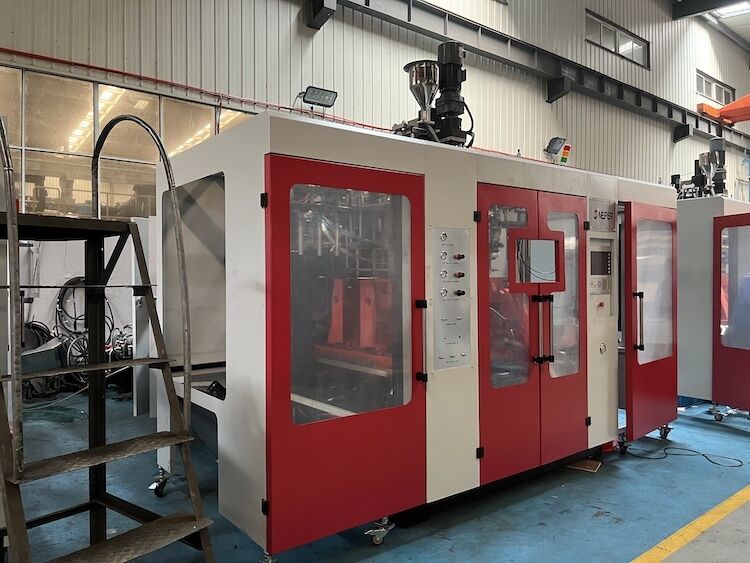
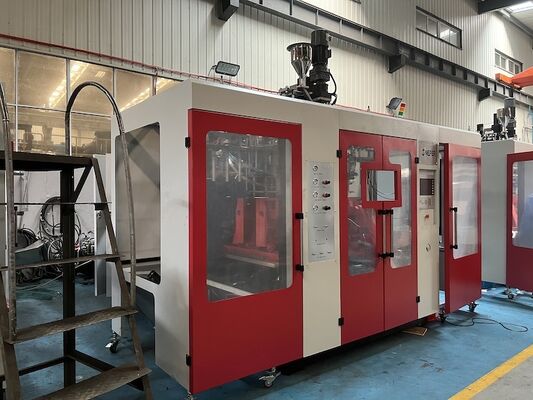
The MP plastic blow molding machine is specifically designed for manufacturing a wide range of high-molecular plastic hollow products. This equipment is capable of producing items with volumes ranging from as small as 5 milliliters up to 100 liters, meeting diverse production needs.
Its versatility allows for the creation of various hollow products, including bottles, pots, jars, barrels, toys, toolboxes, bed boards, desk boards, chairs, and auto parts, among others. This broad application makes it a valuable asset in different industries.
Moreover, the MP blow molding machine supports multiple materials such as PE, PP, PVC, PA, PC, PS, and EVA. It not only accommodates different plastics but also ensures an excellent processing quality, making it a reliable choice for efficient and effective production.
Features:
Features
The extruding device is equipped with a variable frequency motor, which allows for the screw’s rotation speed to adjust during the blowing process. This design supports the use of screws with a high slenderness ratio, enabling the processing of various materials. It offers strong plasticizing capabilities, ensuring high production efficiency while consuming low energy. Additionally, the barrel utilizes a resistance heater that is computer-controlled, providing rapid, stable, and uniform heating.
By installing different heads within the combined extrusion system, which connects two extrusion machines, products with either visible strip lines or double-layered structures can be manufactured. This versatility enhances the range of possible product designs.
The mould clamping device features a toggle-type mechanism along with a linear guide. Being a double station design, it allows the mould platen to move more quickly and smoothly, improving operational stability and efficiency.
The hydraulic oil circuit has been optimized for improved performance. This new design saves power while enabling rapid and stable operation. Installation and maintenance of hydraulic components are made easy with a removable and portable oil tank.
The entire machine is computer-controlled, employing a hydraulic system with double proportional control. It includes an automatic fault alarm system, ensuring reliable operation. High automation is supported along with the ability to store data for up to 40 different mould sets.
Operators can choose between three different modes of operation: “Manual", “Semi Auto", and “Full Auto", providing flexibility depending on production needs.
Safety is ensured through the use of both electrical and mechanical safety devices on the safety door. This prevents the mould from closing if the safety door is open, making the operation safe and reliable.
The machine supports two blowing functions: straight cutting and oblique cutting, including a specialized oblique blowing capability for enhanced processing options.
Technical Parameters:
System Basic Parameters Overview
Basic Specifications
|
Item
|
Unit
|
Basic Parameter
|
|
Applicable Materials
|
|
PE, PP
|
|
Maximum Product Volume
|
L
|
10
|
|
Number of Heads
|
SET
|
3
|
|
Machine Dimensions (L x W x H)
|
M
|
3.5 x 5.6 x 2.65
|
|
Machine Weight
|
TON
|
15
|
Mould Clamping System
|
Item
|
Unit
|
Basic Parameter
|
|
Mould Clamping Force
|
KN
|
200
|
|
Platen Opening Stroke
|
MM
|
240 - 640
|
|
Plate Stroke
|
MM
|
750
|
|
Maximum Mould Size (W x H)
|
MM
|
700 x 420
|
Extrusion System
The extrusion system includes details about screw diameter, screw slenderness ratio, plasticizing capacity, heating zones, and power consumption. Multiple screw options are available with different parameters as outlined below.
|
Parameter
|
Unit
|
100 mm Screw
|
75 mm Screw (1)
|
75 mm Screw (2)
|
25 mm Screw (1)
|
25 mm Screw (2)
|
|
Screw Diameter
|
MM
|
100
|
75
|
75
|
25
|
25
|
|
Screw Slenderness Ratio (L/D)
|
|
26
|
24
|
24
|
22
|
22
|
|
Plasticizing Ability (HDPE)
|
KG/H
|
218
|
75
|
75
|
3
|
3
|
|
Screw Heating Stages/Zones
|
Zone
|
4
|
3
|
3
|
2
|
2
|
|
Screw Heating Power
|
KW
|
17.4
|
12.6
|
12.6
|
1.4
|
1.4
|
|
Screw Fan Power
|
KW
|
0.56
|
0.28
|
0.28
|
|
|
|
Extrusion Motor Power
|
KW
|
55
|
22
|
22
|
1.5
|
1.5
|
Regarding the extrusion head, it features 14 heating zones and requires a heating power of 30 KW, ensuring effective temperature regulation during operation.
Energy Consumption
|
Item
|
Unit
|
Value
|
|
Total Machine Power
|
KW
|
210
|
|
Oil Motor Power
|
KW
|
31
|
|
Air Pressure
|
MPA
|
0.6 - 1
|
|
Compressed Air Volume
|
M³/min
|
1.2
|
|
Cooling Water Volume
|
L/min
|
1000
|
Applications:
Applications of Extrusion Blow Molding Machines
1. Packaging Industry (Primary Application)
Extrusion blow molding is widely used to manufacture a variety of hollow plastic containers serving different sectors. In the personal care and cosmetics industry, it produces items such as shampoo bottles, shower gel containers, liquid soap bottles, and other cosmetic packaging.
For chemical packaging, this technology is used to make lubricant bottles, pesticide containers, and chemical reagent bottles, ensuring durability and chemical resistance.
In the food and beverage industry, extrusion blow molding primarily creates milk bottles, juice bottles, and edible oil containers, often utilizing high-density polyethylene (HDPE) as the material of choice.
Pharmaceutical packaging also benefits from this process, producing medicine bottles and disinfectant containers for non-sterile products.
2. Industrial and Logistics Containers
This method is employed to manufacture large hollow containers such as chemical drums and plastic barrels with volumes ranging from 5 to 200 liters. In the automotive sector, extrusion blow molded parts include fuel tanks, air ducts, coolant tanks, and various fluid reservoirs.
Additionally, equipment housings including hollow cases and enclosures are fabricated using this technology, providing protective and functional solutions for different industrial applications.
3. Agricultural Applications
Extrusion blow molding is essential in agriculture for producing pesticide sprayers, fertilizer containers, water cans, and other hollow components related to irrigation systems, enabling efficient and reliable agricultural practices.
4. Consumer and Household Products
The technology is also applied in the manufacture of consumer goods such as plastic toys—including hollow toys and balls—trash bins, storage containers, as well as water tanks and small reservoirs for household use.
5. Special Applications
Specialized products made via extrusion blow molding include multi-layer co-extruded items like barrier bottles designed to provide anti-permeation and oxygen barrier properties. Additionally, recycled plastic products, typically non-food-grade containers, are created from recycled materials.
There are also items crafted from specialized materials offering features such as anti-static properties, chemical resistance, and flame retardancy to fulfill specific industrial requirements.
6. Common Processing Materials
Extrusion blow molding machines commonly process a range of thermoplastics, with high-density polyethylene (HDPE) being the most prevalent. Other materials include low-density polyethylene (LDPE), linear low-density polyethylene (LLDPE), polypropylene (PP), and polyvinyl chloride (PVC), although PVC usage is restricted in some regions.
For specialized applications, materials like ethylene vinyl acetate (EVA) and polyamide (PA or Nylon) are also utilized.
Summary
In summary, extrusion blow molding machines are vital for the production of hollow plastic products across various industries. Their versatility supports key sectors such as packaging, chemicals, automotive manufacturing, agriculture, and consumer goods, making them indispensable in modern manufacturing processes.


 Your message must be between 20-3,000 characters!