Product Description:
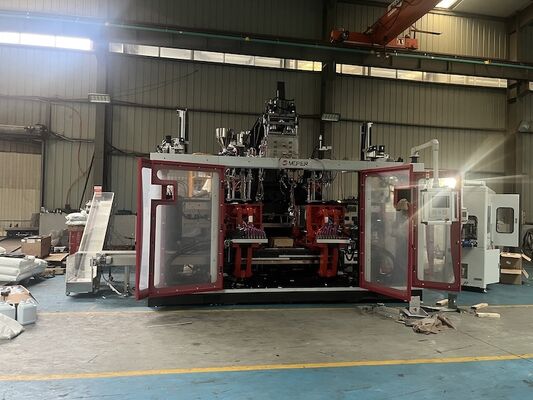
The MP plastic blow molding machine is specifically designed for manufacturing a wide range of plastic hollow products made from high molecular materials. This machine is capable of producing hollow items ranging in size from as small as 5 milliliters up to 100 liters.
It is highly versatile and can be utilized to create various products including bottles, pots, jars, barrels, toys, toolboxes, bed boards, desk boards, chairs, and even automotive parts. Its adaptability makes it suitable for many industrial and commercial applications.
In addition to handling different product types, the machine supports multiple plastic materials such as PE (Polyethylene), PP (Polypropylene), PVC (Polyvinyl Chloride), PA (Polyamide), PC (Polycarbonate), PS (Polystyrene), and EVA (Ethylene Vinyl Acetate). Furthermore, it ensures an excellent manufacturing process, delivering high-quality results consistently.
Features:
The extruding device is equipped with a variable frequency motor that meets the requirements for screw rotation adjustments during the blowing process. A screw with a high slenderness ratio can handle a wide variety of materials, offering excellent plasticizing capabilities, enhanced production efficiency, and reduced energy consumption. The barrel features a resistance heater controlled by a computer system, ensuring rapid, stable, and uniform heating.
By installing different heads within the combined extrusion system connecting two extrusion machines, it is possible to produce blown products featuring visible strip lines or double-layer structures. This flexibility allows for diverse product designs to suit various applications.
The mold clamping mechanism utilizes a toggle-type system alongside a linear guider. The dual-station design enables the mold platen to move quickly and smoothly, improving the overall operational speed and stability of the machine.
An improved hydraulic oil loop design enhances power efficiency while delivering rapid and stable performance. This upgrade contributes to energy savings and more reliable hydraulic operation.
Maintenance and installation of the hydraulic components are user-friendly, with the system equipped with a removable and mobile oil tank, making upkeep convenient and efficient.
The entire machine is controlled via a computer system, with the hydraulic system employing double proportional control. This setup includes automatic fault alarms, ensuring reliable operation. Furthermore, the system supports high automation levels and can store data for up to 40 different molds.
Users can choose from three operation modes: "Manual," "Semi-Auto," and "Full Auto," enabling flexible control to meet varying production needs.
For safety, the machine features an electric and mechanical safety door system that prevents mold closing when the safety door is open, ensuring secure and reliable operation.
The machine supports two blowing functions: straight cutting and oblique cutting, providing versatility in the production process.
Additionally, the machine offers an oblique blowing function, further expanding its capability to produce complex and precise products.
Technical Parameters:
System Basic Parameters Overview
This document presents the fundamental technical specifications and parameters of the system, categorized into several main sections including basic specifications, mould clamping system, extrusion system, and energy consumption details.
Basic Specifications
| Item |
Unit |
Parameter |
| Applicable Materials |
- |
PE, PP |
| Maximum Product Volume |
L |
10 |
| Number of Heads |
SET |
3 |
| Machine Dimensions (L x W x H) |
m |
3.5 x 5.6 x 2.65 |
| Machine Weight |
TON |
15 |
Mould Clamping System
| Item |
Unit |
Parameter |
| Mould Clamping Force |
kN |
200 |
| Platen Opening Stroke |
mm |
240 - 640 |
| Plate Stroke |
mm |
750 |
| Maximum Mould Size (W x H) |
mm |
700 x 420 |
Extrusion System
The extrusion system’s parameters vary depending on specific screw sizes and configurations. Below is a detailed breakdown of screw characteristics and heating stages.
| Item |
Unit |
Value 1 |
Value 2 |
Value 3 |
Value 4 |
Value 5 |
| Screw Diameter |
mm |
100 |
75 |
75 |
25 |
25 |
| Screw Slenderness Ratio (L/D) |
- |
26 |
24 |
24 |
22 |
22 |
| Plasticizing Ability (HDPE) |
kg/h |
218 |
75 |
75 |
3 |
3 |
| Screw Heating Stage/Zone |
Zone |
4 |
3 |
3 |
2 |
2 |
| Screw Heating Power |
kW |
17.4 |
12.6 |
12.6 |
1.4 |
1.4 |
| Screw Fan Power |
kW |
0.56 |
0.28 |
0.28 |
- |
- |
| Extrusion Motor Power |
kW |
55 |
22 |
22 |
1.5 |
1.5 |
Regarding the head configuration, the heating system includes 14 stages or zones, delivering a heating power of 30 kW to ensure uniform temperature control across the extrusion head.
Energy Consumption
| Item |
Unit |
Parameter |
| Total Machine Power |
kW |
210 |
| Oil Motor Power |
kW |
31 |
| Air Pressure |
MPa |
0.6 - 1 |
| Compressed Air Volume |
m³/min |
1.2 |
| Cooling Water Volume |
L/min |
1000 |
Applications:
Applications of Extrusion Molding Machines
An extrusion molding machine plays a crucial role across various industries, serving primarily in the production of items made from plastic, rubber, and other materials through the extrusion process. This versatile equipment is employed in a wide range of applications, demonstrating its importance in modern manufacturing.
Plastic Processing Industry
In the plastic processing sector, extrusion molding machines are extensively used to create numerous products. These include pipes and profiles such as PVC and PE pipes, and specially shaped materials like window frame profiles. They are also instrumental in manufacturing films and sheets, including packaging films, stretch films, and agricultural films.
Additionally, plastic sheets produced through extrusion are commonly utilized for food packaging, construction materials, and housings for electronic products. The machines also play a pivotal role in producing cable and wire coatings, providing the necessary insulation for electrical cables.
Rubber Processing Industry
Within the rubber processing industry, these machines are employed to manufacture a variety of rubber products, including tubes, belts, seals, and gaskets. The extrusion process offers precise control over the dimensions and shapes of these rubber items, ensuring consistency and quality.
Food Industry
Extrusion molding machines are also highly valued in the food industry. They are used to produce an array of food products such as puffed snacks, biscuits, and candies. This technology enables the creation of diverse shapes and textures, tailored to meet specific product requirements.
Automotive Industry
In automotive manufacturing, extrusion molding machines contribute to the production of both interior and exterior components. Examples include window seals, various plastic parts inside vehicles, and automotive pipe systems, all benefiting from the precision and efficiency of the extrusion process.
Construction Industry
The construction sector utilizes extrusion molding machines for producing essential building materials. These include window and door profiles, decorative panels, roofing drainage systems, and other structural components, highlighting the broad utility of extrusion technology.
Medical Industry
In medical device manufacturing, extrusion molding machines are crucial for creating disposable and precision items such as syringes, catheters, and IV tubes. The technology ensures the high standards of hygiene and accuracy demanded by medical products.
3D Printing
Finally, extrusion technology finds application in additive manufacturing where it is used to produce 3D printing filaments. This is especially common with plastics and composite materials, enabling the creation of complex three-dimensional objects with high precision.


 Your message must be between 20-3,000 characters!