“High speed” is a system specification, not a pump setting
Thin-wall packaging — 0.4 to 0.8 mm PP cups, lids, containers and cutlery — pushes flow length-to-thickness ratios of 200:1 to 400:1. At those ratios the melt front either reaches the cavity edge in a fraction of a second or it freezes short. A four-second cycle on a 0.5 mm PP cup is therefore not achieved by raising pump pressure; it is the sum of an accumulator-assisted injection unit, a servo power pack, a hot-runner mould with balanced gates and a take-out robot that never waits.
1. Accumulator plus servo: the two changes that actually matter
An accumulator stores hydraulic energy close to the injection cylinder. It decouples injection velocity from pump flow, so the screw can begin recovery while the mould is still cooling and the next shot does not lose velocity on the first millimetre. On the MZ-130 and MZ-170 high-speed platforms, this combination is what makes a sub-five-second cup cycle repeatable across a shift rather than a one-off demonstration.
| MZ-170 specification | Value |
|---|
| Clamp force | 1700 kN |
| Shot volume | 277 / 318 / 392 cm³ |
| Shot weight | 260 / 298 / 368 g |
| Screw diameter | 42 / 45 / 50 mm |
| Screw L/D ratio | 21.5:1 / 20:1 / 18:1 |
| Injection pressure | 190 / 166 / 135 MPa |
| Screw stroke and speed | 200 mm, 0–200 rpm stepless |
| Opening stroke | 430 mm |
2. Half of a thin-wall line is the mould
Thin-wall tooling wants 1.2343 or 1.2344 (H11/H13) ESR steel or equivalent for core and cavity inserts, generous cooling with baffles or conformal inserts where budget allows, venting of 0.02–0.03 mm at the runner end, and valve-gate hot runners with individually controlled tips. A single cavity-pressure sensor is the cheapest insurance on the project: it converts a “looks fine” conversation into a measured packing profile you can defend to a customer.
3. Warpage: control these five things in this order
- Mould temperature uniformity within ±2 °C between core and cavity sides
- Packing profile — short high first stage followed by a decaying hold, rather than one long hold
- Balanced cooling before ejection; a part released at 70 °C will move after it leaves the mould
- Even ejector force — inspect the first 100 shots for ejector marks and white stress marks
- Material grade: higher-MFI homo-PP fills faster but warps more; a copolymer buys flatness at the cost of stiffness
4. Energy: the number that hides behind the quotation
On a 170-ton high-speed cell running four-second cycles, the difference between a fixed-displacement pump and a closed-loop servo system is typically 30–50% of hydraulic energy demand, because the servo idles at near-zero draw during cooling. Ask suppliers for kWh per 1000 parts measured at the same cycle and the same mould, not for a percentage printed on a brochure.
5. Sizing checklist for a thin-wall line
- Keep the required shot between 30% and 70% of rated shot volume — too small wastes residence time, too large risks short shots
- Clamp force: projected area × cavity pressure (40–60 MPa is typical for thin-wall PP) plus margin
- Tie-bar spacing and mould height range must accept the full hot-runner stack, not just the cavity plate
- Agree robot interface, conveyor height and take-out stroke before the machine is ordered
- Write a cycle-time acceptance test into the purchase order, run on your mould
A note on the numbers
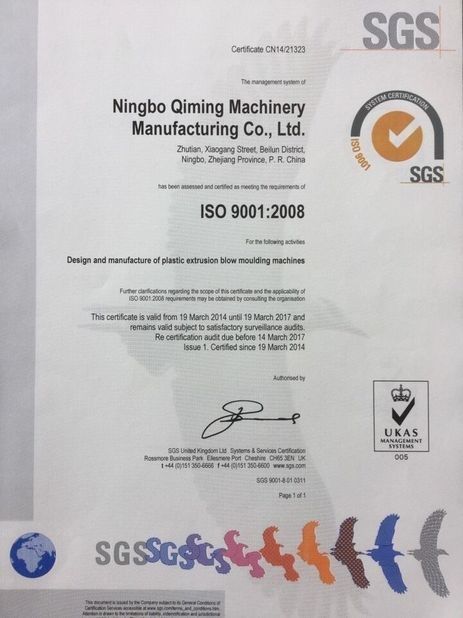
MZ-170 figures come from Ningbo Qiming’s MZ series documentation. The four-second reference applies to a 0.5 mm PP cup mould on an accumulator-equipped machine. Heavier sections, higher cavitation and masterbatch colouring will lengthen the cycle, so validate on your own tool.


 Your message must be between 20-3,000 characters!